
Support Sickle Cell
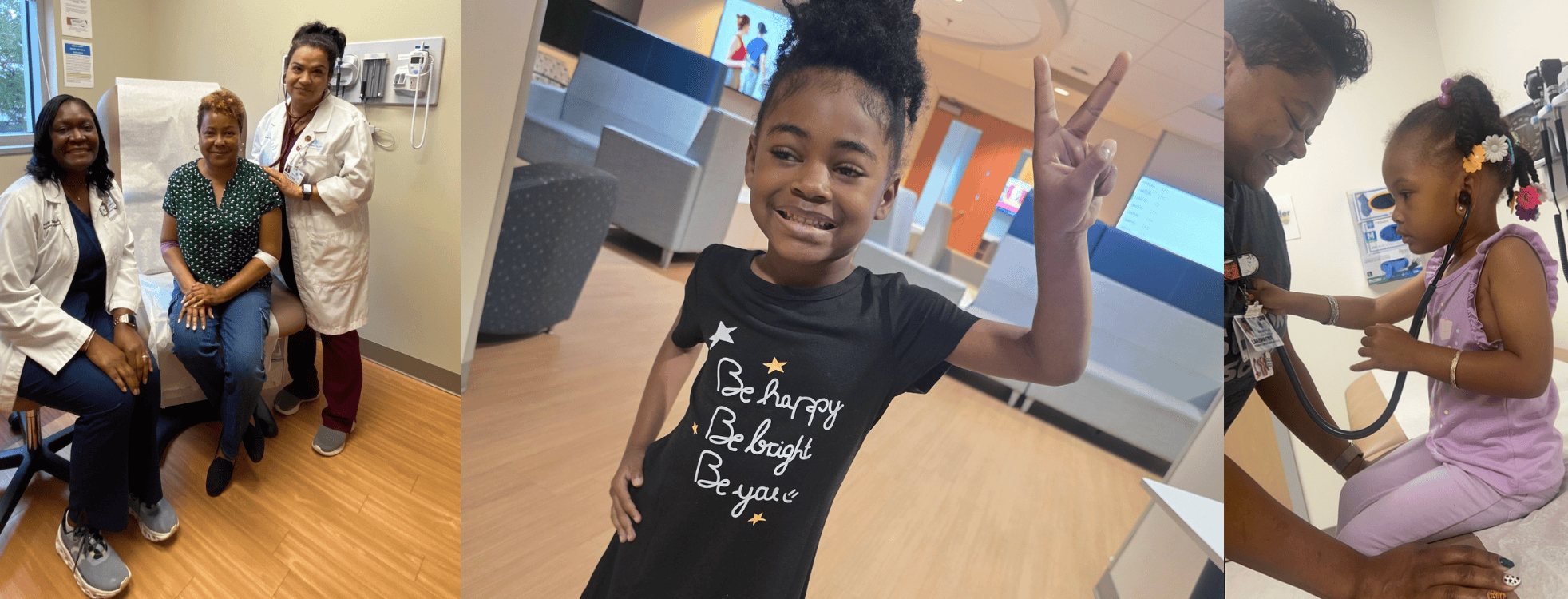
Atrium Health Levine Children's and Atrium Health Levine Cancer Institute in Charlotte share a deep commitment to lifting up others to ensure they are thriving members of our community. A particular population of those treated at Atrium Health—pediatric and adult sickle cell disease patients—needs our attention and support. Sickle cell disease is a chronic condition that primarily impacts African Americans.
• Adults comprise 60% of this group, and a third are emerging adults.
• Every day, they face side effects such as pain, anemia, stroke risk, bone problems, and more.
Our patients need your help and support: As a not-for-profit health system, we value the financial support of the community to enable us to help as many young people living with sickle cell as we can. Learn more below.
In recent years, Atrium Health has made tremendous advances in caring for these patients, providing gene-editing therapy, transfusion therapy, and bone marrow transplants.
With philanthropic support, we will continue our work to:
- Expand access to psychosocial support
- Develop novel ways to treat sickle cell pain
- Improve patient care
- Increase community awareness of sickle cell disease
Be a part of these life-changing efforts:
In the next 3-5 years, Atrium Health plans to integrate both pediatric and adult sickle cell teams into a cohesive, supportive, and comprehensive program, one that treats and supports sickle cell patients from childhood to adulthood. This model would emphasize cutting-edge therapies, pain management and patient navigation, community outreach and social support, reproductive health/support, and a multidisciplinary clinic to support patients' transition from pediatric to adult care management.
Immediate and essential programmatic needs that would benefit from your support include:
- Mental health providers specializing in sickle cell disease and pain control
- Resources for increased community education and awareness
- Wrap-around services for patients and their families, increasing their access to care, as well as their outcomes