
April 22, 2026 | By Atrium Health Foundation | In Contributor News
When presented with the opportunity to pilot artificial intelligence (AI) to ease documentation burden, the cardiac team at Atrium Health Union was ready to lead the way. In February 2025, the unit became the ninth in the nation to implement an ambient listening tool within its medical record system — an innovation aimed at giving nurses more time with patients.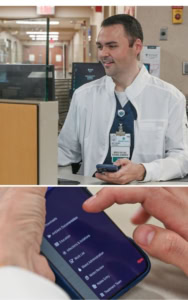
The pilot launched with 73 users and introduced a new way to document care. The technology securely “listens” to real-time patient conversations and converts them into clinical notes. Instead of stepping away to chart, nurses can assess patients and discuss symptoms while the system captures relevant details. The nurse then reviews and verifies the note before it enters the medical record.
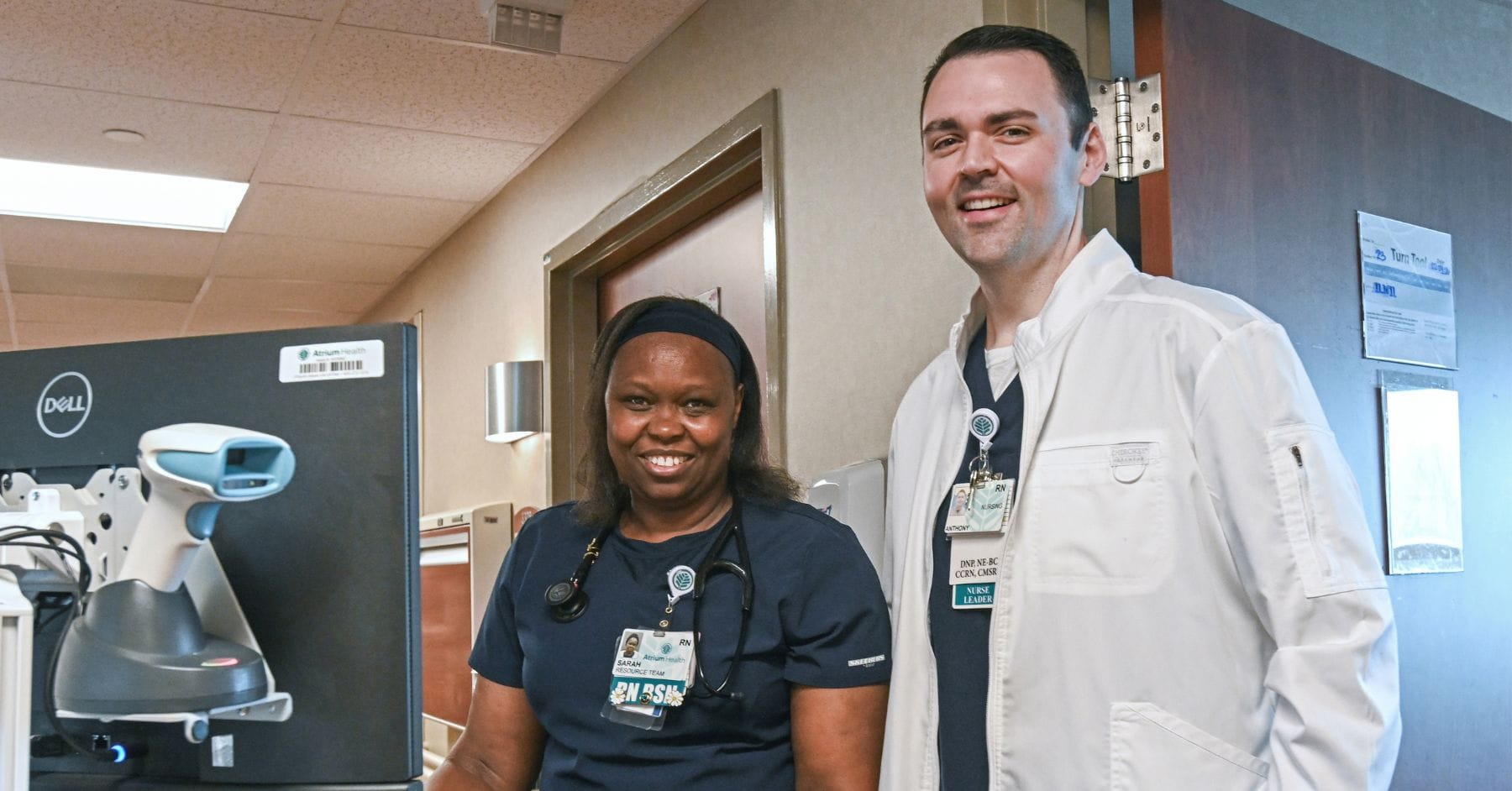
“If a patient shares their pain level is eight out of 10, or a nurse observes swelling or crackles in the lungs, the system captures those details without requiring separate dictation,” said Anthony Carnes, nurse manager of Cardiac Telemetry, Outpatient Infusion, and Telemetry Monitoring at Atrium Health Union. “The result is more natural conversation, increased patient education, and less time spent behind a computer.” Certified nursing assistants, registered nurses, and healthcare technicians primarily use the tool.
While early adoption revealed training gaps resulting in lower-than-expected utilization, leaders viewed the challenge as an opportunity to improve the rollout. Last fall, the American Nurses Credentialing Center (ANCC) recognized the hospital’s innovation with the ANCC Pathway Award®, sponsored by Press Ganey, to enhance and expand the initiative. The 12-month project, “Preparing the Front-Line Nurse for AI,” will introduce simulation-based education, leader toolkits, and evidence-based change management strategies to help nursing professionals build confidence and trust in the technology.
Ultimately, the $100,000 grant will enable Atrium Health Union to expand use of the tool, while developing a scalable framework for implementation that could support more than 40,000 nurses across Advocate Health.
“We don’t want to put more back on the nurses,” said Missy Baker, chief nursing officer at Atrium Health Union. “We want to use this to alleviate burden and give nurses more time to be with the patient and communicate better.”
Philanthropy plays an essential role in advancing the nursing profession. To learn more or to honor an Atrium Health nurse with a gift, visit dev.atrium.probuiltwebsite.com/Nurses.